Showing posts with label Fred Astaire. Show all posts
Showing posts with label Fred Astaire. Show all posts
Sunday, September 9, 2012


Sunday, July 8, 2012
Fred Astaire-Musical Films
- Dancing Lady (1933)
- Flying Down to Rio (1933)
- The Gay Divorcee (1934)
- Roberta (1935)
- Top Hat (1935)
- Follow the Fleet (1936)
- Swing Time (1936)
- Shall We Dance (1937)
- A Damsel in Distress (1937)
- Carefree (1938)
- The Story of Vernon and Irene Castle (1939)
- Broadway Melody of 1940 (1940)
- Second Chorus (1940)
- You'll Never Get Rich (1941)
- Holiday Inn (1942)
- You Were Never Lovelier (1942)
- The Sky's the Limit (1943)
- Yolanda and the Thief (1945)
- Ziegfeld Follies (1946)
- Blue Skies (1946)
- Easter Parade (1948)
- The Barkleys of Broadway (1949)
- Three Little Words (1950)
- Let's Dance (1950)
- Royal Wedding (1951)
- The Belle of New York (1952)
- The Band Wagon (1953)
- Daddy Long Legs (1955)
- Funny Face (1957)
- Silk Stockings (1957)
- The Notorious Landlady (1962)
- Finian's Rainbow (1968)
- That's Entertainment, Part II (1976) (narrator and performer)
Saturday, July 7, 2012
Fred Astaire-Awards, Honors, And Tributes
- 1938: Invited to place his hand and foot prints in cement at Grauman's Chinese Theatre, Hollywood.
- 1950: Ginger Rogers presented an honorary Academy Award to Astaire "for his unique artistry and his contributions to the technique of musical pictures".
- 1950: Golden Globe for "Best Motion Picture Actor -Music/Comedy" for Three Little Words
- 1958: Emmy Award for "Best Single Performance by an Actor" for An Evening with Fred Astaire
- 1959: Dance Magazine award
- 1960: Nominated for Emmy Award for "Program Achievement" for Another Evening with Fred Astaire
- 1960: Golden Globe Cecil B. DeMille Award for "Lifetime Achievement in Motion Pictures"
- 1961: Emmy Award for "Program Achievement" in 1961 for Astaire Time
- 1961: Voted Champion of Champions—Best Television performer in annual television critics and columnists poll conducted by Television Today and Motion Picture Daily
- 1965: The George Eastman Award from the George Eastman House for "outstanding contributions to motion pictures"
- 1968: Nominated for an Emmy Award for Musical Variety Program for The Fred Astaire Show
- 1972: Named Musical Comedy Star of the Century by Liberty, "The Nostalgia Magazine".
- 1973: Subject of a Gala by the Film Society of Lincoln Center
- 1975: Academy Award nomination for The Towering Inferno
- 1975: Golden Globe for "Best Supporting Actor", BAFTA and David di Donatello awards for The Towering Inferno
- 1978: Emmy Award for "Best Actor—Drama or Comedy Special" for A Family Upside Down
- 1978: Honored by the Academy of Television Arts & Sciences.
- 1978: First recipient of the Kennedy Center Honors
- 1978: National Artist Award from the American National Theatre Association for "contributing immeasurably to the American Theatre"
- 1981: The Lifetime Achievement Award from the American Film Institute
- 1982: The Anglo-American Contemporary Dance Foundation announces the Astaire Awards "to honor Fred Astaire and his sister Adele and to reward the achievement of an outstanding dancer or dancers". The awards have since been renamed The Fred and Adele Astaire Awards
- 1987: The Capezio Dance Shoe Award (co-awarded with Rudolph Nureyev)
- 1987: Inducted into the National Museum of Dance C.V. Whitney Hall of Fame in Saratoga Springs, New York
- 1989: Posthumous award of Grammy Lifetime Achievement Award
- 1989: Posthumous induction into the Television Hall of Fame
- 1991: Posthumous induction into the Ballroom Dancer's Hall of Fame
- 1999: Posthumous award of Grammy Hall of Fame Award for 1952 The Astaire Story album
- 2000: Ava Astaire McKenzie unveils a plaque in honor of her father, erected by the citizens of Lismore, County Waterford, Ireland
- 2008: Conference to honor the life and work of Fred Astaire at Oriel College, University of Oxford, June 21–24.
Built in 1905, the Gottlieb Storz Mansion in Astaire's hometown of Omaha includes the "Adele and Fred Astaire Ballroom" on the top floor, which is the only memorial to their Omaha roots.
Astaire is referenced in the 2003 animated feature, The Triplets of Belleville, in which he is eaten by his shoes after a fast-paced dance act.
Friday, July 6, 2012
Fred Astaire-Personal Life

Politically, Astaire was a conservative and a lifelong Republican Party supporter. He never made his political views publicly known. Along with Bing Crosby, George Murphy, Ginger Rogers and others he was a charter (founding) member of the Hollywood Republican Committee. He was churchgoing, supportive of American military action and was dismissive of the more open sexiness of movies in the 1970s.
Always immaculately turned out, he and Cary Grant were called "the best-dressed actor[s] in American movies". Astaire remained a male fashion icon even into his later years, eschewing his trademark top hat, white tie and tails (for which he never really cared) in favor of a breezy casual style of tailored sports jackets, colored shirts, cravats and slacks—the latter usually held up by the idiosyncratic use of an old tie in place of a belt.
Astaire was married for the first time in 1933, to the 25-year-old Phyllis Potter. She was a Boston-born New York socialite and former wife of Eliphalet Nott Potter III (1906–1981). Astaire pursued her ardently for roughly two years, and despite the objections of his mother and sister. Phyllis's death from lung cancer, at the age of 46, ended 21 years of a blissful marriage and left Astaire devastated. Astaire attempted to drop out of the film “Daddy Long Legs”, offering to pay the production costs to date, but was persuaded to stay.
In addition to Phyllis Potter's son, Eliphalet IV (known as Peter), the Astaires had two children. Fred, Jr. (born January 1, 1936) appeared with his father in the movie “Midas Run”, but became a charter pilot and rancher instead of an actor. He married Gale in 1956. Ava Astaire McKenzie (born March 19, 1942; married Richard MacKenzie) remains actively involved in promoting her late father's heritage.
His friend, David Niven, described him as "a pixie—timid, always warm-hearted, with a penchant for schoolboy jokes." Astaire was a lifelong golf and Thoroughbred horse racing enthusiast. In 1946 his horse Triplicate won the prestigious Hollywood Gold Cup and San Juan Capistrano Handicap. He remained physically active well into his eighties. At age seventy-eight, he broke his left wrist while riding his grandson's skateboard.
On June 24, 1980, he was married again, to Robyn Smith, a jockey 45 years his junior, who rode for Alfred G. Vanderbilt II and was herself, on the cover of Sports Illustrated on July 31, 1972.
Astaire died from pneumonia on June 22, 1987. He was 88 years old. He was interred in the Oakwood Memorial Park Cemetery in Chatsworth, California. One last request of his was to thank his fans for their years of support.
Astaire's life has never been portrayed on film. He always refused permission for such portrayals, saying, "However much they offer me—and offers come in all the time—I shall not sell." Astaire's will included a clause requesting that no such portrayal ever take place; he commented, "It is there because I have no particular desire to have my life misinterpreted, which it would be."
Thursday, July 5, 2012
Fred Astaire-Televised Dance And Straight Acting

Astaire did not retire from dancing completely. He made a series of four highly rated Emmy Award-winning musical specials for television in 1958, 1959, 1960, and 1968. The first of these programs, 1958's “An Evening with Fred Astaire”, won nine Emmy Awards, including "Best Single Performance by an Actor" and "Most Outstanding Single Program of the Year." It was also noteworthy for being the first major broadcast to be prerecorded on color videotape, and has recently been restored. The restoration won technical Emmy in 1988 for Ed Reitan, Don Kent, and Dan Einstein, who restored the original videotape, transferring its contents to a modern format, and filling in gaps where the tape had deteriorated with kinescope footage. Astaire personally won the Emmy for Best Single Performance by an Actor but the choice had a controversial backlash because many felt that his dancing in the special was not the type of "acting" the award was designed for. At one point Astaire even offered to return the award, but the Television Academy refused to consider it.
Astaire played the role of Julian Osborne in the 1959 movie “On the Beach”. It was nominated a Golden Globe Best Supporting Actor award for his performance, losing to Stephen Boyd in “Ben Hur “. Astaire's last major musical film was “Finian's Rainbow”, directed by Francis Ford Coppola. He shed his white tie and tails to play an Irish rogue who believes if he buries a crock of gold in the shadows of Fort Knox it will multiply. His dance partner was Petula Clark, who portrayed his skeptical daughter. He admitted to being as nervous about singing with her as she confessed to being apprehensive about dancing with him. Unfortunately, the film was a box-office failure, though it has gained a strong reputation over the years since its release.
Astaire continued to act into the 1970s, appearing on television as the father of Robert Wagner's character of Alexander Mundy in “It Takes a Thief “and in films such as “The Towering Inferno”, in which he danced with Jennifer Jones and for which he received his only Academy Award nomination, in the category of Best Supporting Actor. He voiced the mailman narrator in 1970's classic animated film “Santa Claus Is Comin' to Town”. He appeared in the first two “That's Entertainment!” documentaries in the mid 1970s. In the second, aged seventy-six, he performed a number of song-and-dance routines with Kelly, his last dance performances in a musical film.
In the summer of 1975, he made three albums in London, “Attitude Dancing”, “They Can't Take These Away From Me”, and “A Couple of Song and Dance Men”, the last an album of duets with Bing Crosby. In 1976, he played a supporting role as a dog owner in the cult movie “The Amazing Dobermans”. Fred Astaire played Dr. Seamus Scully in the French film “The Purple Taxi”. In 1978, he co-starred with Helen Hayes in a well-received television film, “A Family Upside Down”, in which they play an elderly couple coping with failing health.
Astaire won an Emmy Award for his performance. He made a well-publicized guest appearance on the science fiction television series “Battlestar Galactica” in 1979, as Chameleon, the possible father of Starbuck, in "The Man with Nine Lives", a role written for him by Donald P. Bellisario. Astaire asked his agent to obtain a role for him on Galactica because of his grandchildren's interest in the series. His final film role was the 1981 adaptation of Peter Straub's novel Ghost Story. This horror film was also the last for two of his most prominent castmates, Melvyn Douglas and Douglas Fairbanks,
Wednesday, July 4, 2012
Fred Astaire-MGM And Second Retirement

Astaire soon returned to the big screen to replace the injured Kelly in “Easter Parade”. A final reunion with Rogers in “The Barkleys of Broadway”. He then went on to make more musicals throughout the 1950s: “Let's Dance”, “Royal Wedding”, “Three Little Words” and “The Belle of New York”, “The Band Wagon” and “Silk Stockings”, “Daddy Long Legs”, and “Funny Face”.
During 1952 Astaire recorded “The Astaire Story”, a four-volume album with a quintet led by Oscar Peterson. The album, produced by Norman Granz, provided a musical overview of Astaire's career. “The Astaire Story” later won the Grammy Hall of Fame Award in 1999, a special Grammy award to honor recordings that are at least twenty-five years old and that have "qualitative or historical significance."
His legacy at this point was 30 musical films in 25 years. Afterwards, Astaire announced that he was retiring from dancing in film to concentrate on dramatic acting, scoring rave reviews for the nuclear war drama “On the Beach”.
Tuesday, July 3, 2012
Fred Astaire-Early Retirement

In 1939, Astaire left RKO to freelance and pursue new film opportunities. Throughout this period, Astaire continued to value the input of choreographic collaborators. Unlike the 1930s when he worked almost exclusively with Hermes Pan, he tapped the talents of other choreographers in an effort to continually innovate. His first post-Ginger dance partner was the redoubtable Eleanor Powell in “Broadway Melody of 1940” where they performed a celebrated extended dance routine to Cole Porter's "Begin the Beguine". In his autobiography Steps in Time, Astaire remarked, "She 'put 'em down like a man', no ricky-ticky-sissy stuff with Ellie. She really knocked out a tap dance in a class by herself."
He played alongside Bing Crosby in “Holiday Inn” and later “Blue Skies” In spite of the enormous financial success of both, was reportedly dissatisfied with roles where he lost the girl to Crosby. The former film is particularly remembered for his virtuoso solo dance to "Let's Say it with Firecrackers" while the latter film featured an innovative song and dance routine to a song indelibly associated with him: "Puttin' on the Ritz". Other partners during this period included Paulette Goddard in “Second Chorus”, in which he dance-conducted the Artie Shaw orchestra.
He made two pictures with Rita Hayworth, the daughter of his former vaudeville dance idols, the Cansinos: the first “You'll Never Get Rich” catapulted Hayworth to stardom and provided Astaire with his first opportunity to integrate Latin American dance idioms into his style, taking advantage of Hayworth's professional Latin dance pedigree. His second film with Hayworth, “You Were Never Lovelier”, was equally successful and featured a duet to Kern's "I'm Old Fashioned," It became the centerpiece of Jerome Robbins's 1983 New York City Ballet tribute to Astaire. He next appeared opposite the seventeen-year-old Joan Leslie in the wartime drama “The Sky's the Limit”, where he introduced Arlen and Mercer's "One for My Baby" while dancing on a bar counter in a dark and troubled routine. This film, which was choreographed by Astaire alone and achieved modest box office success, represented an important departure for Astaire from his usual charming happy-go-lucky screen persona and confused contemporary critics.
His next partner, Lucille Bremer, was featured in two lavish vehicles. The fantasy “Yolanda and the Thief”, which featured an avant-garde surrealistic ballet, and the musical revue “Ziegfeld Follies”, which featured a memorable teaming of Astaire with Gene Kelly to "The Babbit and the Bromide," a Gershwin song Astaire had introduced with his sister Adele back in 1927. While Follies was a hit, Yolanda bombed at the box office and Astaire, ever insecure and believing his career was beginning to falter, surprised his audiences by announcing his retirement during the production of “Blue Skies”, nominating "Puttin' on the Ritz" as his farewell dance.
After announcing his retirement in 1946, Astaire concentrated on his horse-racing interests and went on to found the Fred Astaire Dance Studios in 1947, which he subsequently sold in 1966.
Monday, July 2, 2012
Fred Astaire-RKO

According to Hollywood folklore, a screen test report on Astaire for RKO Radio Pictures, now lost along with the test, is reported to have read: "Can't sing. Can't act. Balding. Can dance a little." The producer of the Astaire-Rogers pictures, Pandro S. Berman, claimed he had never heard the story and that it only emerged years later. Astaire later insisted that the report had actually read: "Can't act. Slightly bald. Also dances".
In any case, the test was clearly disappointing. David O. Selznick, who had signed Astaire to RKO and commissioned the test, stated in a memo, "I am uncertain about the man, but I feel, in spite of his enormous ears and bad chin line, that his charm is so tremendous that it comes through even on this wretched test." However, this did not affect RKO's plans for Astaire. RKO loaned Astaire for a few days to MGM in 1933 for his Hollywood debut. Astaire appeared as himself dancing with Joan Crawford in the successful musical film “Dancing Lady”.
On his return to RKO, he got fifth billing after fourth billed Ginger Rogers in the 1933 Dolores del Río vehicle “Flying Down to Rio”. In a review, Variety magazine attributed its massive success to Astaire's presence: "The main point of “Flying Down to Rio” is the screen promise of Fred Astaire ... He's assuredly a bet after this one, for he's distinctly likable on the screen, the mike is kind to his voice and as a dancer he remains in a class by himself. The latter observation will be no news to the profession, which has long admitted that Astaire starts dancing where the others stop hoofing."
Having already been linked to his sister Adele on stage, Astaire was initially very reluctant to become part of another dance team. He wrote his agent, "I don't mind making another picture with her, but as for this 'team' idea, it's 'out!' I've just managed to live down one partnership and I don't want to be bothered with any more." Astaire was persuaded by the obvious public appeal of the Astaire-Rogers pairing. The partnership, and the choreography of Astaire and Hermes Pan, helped make dancing an important element of the Hollywood film musical. Astaire and Rogers made ten films together, including “The Gay Divorcee”, “Roberta” , “Top Hat”, “Follow the Fleet”, “Swing Time”, “Shall We Dance”, and “Carefree”. Six out of the nine Astaire-Rogers musicals became the biggest moneymakers for RKO. All of the films brought a certain prestige and artistry that all studios coveted at the time. Their partnership elevated them both to stardom; as Katharine Hepburn reportedly said, "He gives her class and she gives him sex appeal."
Astaire received a percentage of the films' profits, something extremely rare in actors' contracts at that time; and complete autonomy over how the dances would be presented, allowing him to revolutionize dance on film.
Astaire is credited with two important innovations in early film musicals. First, he insisted that the (almost stationary) camera film a dance routine in a single shot, if possible, while holding the dancers in full view at all times. Astaire famously quipped: "Either the camera will dance, or I will." Astaire maintained this policy from “The Gay Divorcee” onward. Until he was overruled by Francis Ford Coppola, who directed “Finian's Rainbow”. It was Astaire's last film musical.
Astaire's style of dance sequences thus contrasted with the Busby Berkeley musicals, which were known for dance sequences filled with extravagant aerial shots, quick takes, and zooms on certain areas of the body, such as the arms or legs. Astaire was adamant that all song and dance routines be seamlessly integrated into the plotlines of the film. Instead of using dance as spectacle as Busby Berkeley did, Astaire used it to move the plot along. Typically, an Astaire picture would include a solo performance by Astaire—which he termed his "sock solo"—a partnered comedy dance routine, and a partnered romantic dance routine.
Dance commentators Arlene Croce, Hannah Hyam and John Mueller consider Rogers to have been Astaire's greatest dance partner, a view shared by Hermes Pan and Stanley Donen. Film critic Pauline Kael adopts a more neutral stance, while Time magazine film critic Richard Schickel writes "The nostalgia surrounding Rogers-Astaire tends to bleach out other partners."
Mueller sums up Rogers's abilities as follows: "Rogers was outstanding among Astaire's partners not because she was superior to others as a dancer, but because, as a skilled, intuitive actress, she was cagey enough to realize that acting did not stop when dancing began ... the reason so many women have fantasized about dancing with Fred Astaire is that Ginger Rogers conveyed the impression that dancing with him is the most thrilling experience imaginable." According to Astaire, "Ginger had never danced with a partner before ["Flying Down to Rio"]. She faked it an awful lot. She couldn't tap and she couldn't do this and that ... but Ginger had style and talent and improved as she went along. She got so that after a while everyone else who danced with me looked wrong."
For her part, Rogers described Astaire's uncompromising standards extending to the whole production, "Sometimes he'll think of a new line of dialogue or a new angle for the story ... they never know what time of night he'll call up and start ranting enthusiastically about a fresh idea ... No loafing on the job on an Astaire picture, and no cutting corners."
Astaire was still unwilling to have his career tied exclusively to any partnership, however. He negotiated with RKO to strike out on his own with “A Damsel in Distress” in 1937 with an inexperienced, non-dancing Joan Fontaine, unsuccessfully as it turned out. He returned to make two more films with Rogers, “Carefree” and “The Story of Vernon and Irene Castle”. While both films earned respectable gross incomes, they both lost money due to increased production costs and Astaire left RKO. Rogers remained and went on to become the studio's hottest property in the early forties. They were reunited in 1949 at MGM for their final outing, “The Barkleys of Broadway”.
Sunday, July 1, 2012
Fred Astaire-Broadway And London

Fred and Adele followed up with several more shows, and of their work in “The Passing Show of 1918”. Heywood Broun wrote: "In an evening in which there was an abundance of good dancing, Fred Astaire stood out ... He and his partner, Adele Astaire, made the show pause early in the evening with a beautiful loose-limbed dance."
Astaire's dancing skill were beginning to outshine his sister's. She still set the tone of their act and her sparkle and humor drew much of the attention. It was due in part to Fred's careful preparation and strong supporting choreography.
In the 1920s, Fred and Adele appeared on Broadway and on the London stage in shows such as George and Ira Gershwin's “Lady Be Good” and “Funny Face”.
Later in “The Band Wagon”, winning popular acclaim with the theater crowd on both sides of the Atlantic. By then, Astaire's tap dancing was recognized as among the best, as Robert Benchley wrote in 1930, "I don't think that I will plunge the nation into war by stating that Fred is the greatest tap-dancer in the world."
After the close of “Funny Face”, the Astaires went to Hollywood for a screen test (now lost) at Paramount Pictures. They were not considered suitable for films.
They split in 1932 when Adele married her first husband, Lord Charles Arthur Francis Cavendish. Fred Astaire went on to achieve success on his own on Broadway and in London with “Gay Divorce”, while considering offers from Hollywood. The end of the partnership was traumatic for Astaire, but stimulated him to expand his range.
Free of the brother-sister constraints of the former pairing and with a new partner (Claire Luce), he created a romantic partnered dance to Cole Porter's "Night and Day". Luce stated that she had to encourage him to take a more romantic approach: "Come on, Fred, I'm not your sister, you know." The success of the stage play was credited to this number, and when recreated in the film version of the play “The Gay Divorcee”. It ushered in a new era in filmed dance. Recently, film footage taken by Fred Stone of Astaire performing in “Gay Divorce” with Luce's successor, Dorothy Stone. In New York in 1933 was uncovered by dancer and historian Betsy Baytos and now represents the earliest known performance footage of Astaire.
Saturday, June 30, 2012
Fred Astaire-Early Life
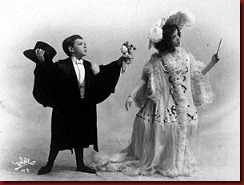
Astaire was born in Omaha, Nebraska, on May 10, 1899. His parents were Johanna "Ann" and Frederic "Fritz" Austerlitz. Astaire's mother was born in the United States to Lutheran German immigrants from East Prussia and Alsace. Astaire's father was born in Linz, Austria, to Jewish parents who had converted to Catholicism.
Arriving in New York City at age 24 on October 26, 1892, and being inspected at Ellis Island, Astaire's father, hoping to find work in his brewing trade, moved to Omaha, Nebraska, and landed a job with the Storz Brewing Company.
Astaire's mother dreamed of escaping Omaha by virtue of her children's talents. Adele Astaire revealed herself to be an instinctive dancer and singer. Astaire's mother planned a "brother-and-sister act," which was common in vaudeville at the time. Although Astaire refused dance lessons at first, he easily mimicked his older sister's step and took up piano, accordion and clarinet.
When their father suddenly lost his job, the family moved to New York City to launch the show business career of the children. The children trained at the Alviene Master School of the Theatre and Academy of Cultural Arts.
Fred and Adele's mother suggested they change their name to "Astaire," as she felt "Austerlitz" sounded as though it could be the name of a battle. They were taught dance, speaking, and singing in preparation for developing an act. Family legend attributes the name to an uncle surnamed "L'Astaire". Their first act was called Juvenile Artists Presenting an Electric Musical Toe-Dancing Novelty. Fred wore a top hat and tails in the first half and a lobster outfit in the second. The goofy act debuted in Keyport, New Jersey, in a "tryout theater." The local paper wrote, "the Astaires are the greatest child act in vaudeville."
As a result of their father's salesmanship, Fred and Adele rapidly landed a major contract and played the famed Orpheum Circuit not only in Omaha but throughout the United States. Soon Adele grew to at least three inches taller than Fred and the pair began to look incongruous. The family decided to take a two-year break from show business to let time take its course and to avoid trouble from the Gerry Society and the child labor laws of the time. In 1912, Fred became an Episcopalian.
The career of the Astaire siblings resumed with mixed fortunes, though with increasing skill and polish, as they began to incorporate tap dancing into their routines.
Astaire's dancing was inspired by Bill "Bojangles" Robinson and John "Bubbles" Sublett. From vaudeville dancer Aurelio Coccia, they learned the tango, waltz and other ballroom dances popularized by Vernon and Irene Castle.
By age 14, Fred had taken on the musical responsibilities for their act. He first met George Gershwin in 1916. Fred had already been hunting for new music and dance ideas. Their chance meeting was to deeply affect the careers of both artists. Astaire was always on the lookout for new steps on the circuit and was starting to demonstrate his ceaseless quest for novelty and perfection. The Astaires broke into Broadway in 1917 with “Over the Top”, a patriotic revue. The Astaires performed for U.S. and Allied troops at this time too.
Sunday, June 24, 2012
Sunday, June 17, 2012
Tuesday, May 8, 2012
Monday, April 16, 2012
Thursday, March 29, 2012
Tuesday, March 27, 2012
Monday, March 12, 2012
Sunday, March 11, 2012
Saturday, March 10, 2012
Thursday, March 8, 2012
Subscribe to:
Posts (Atom)